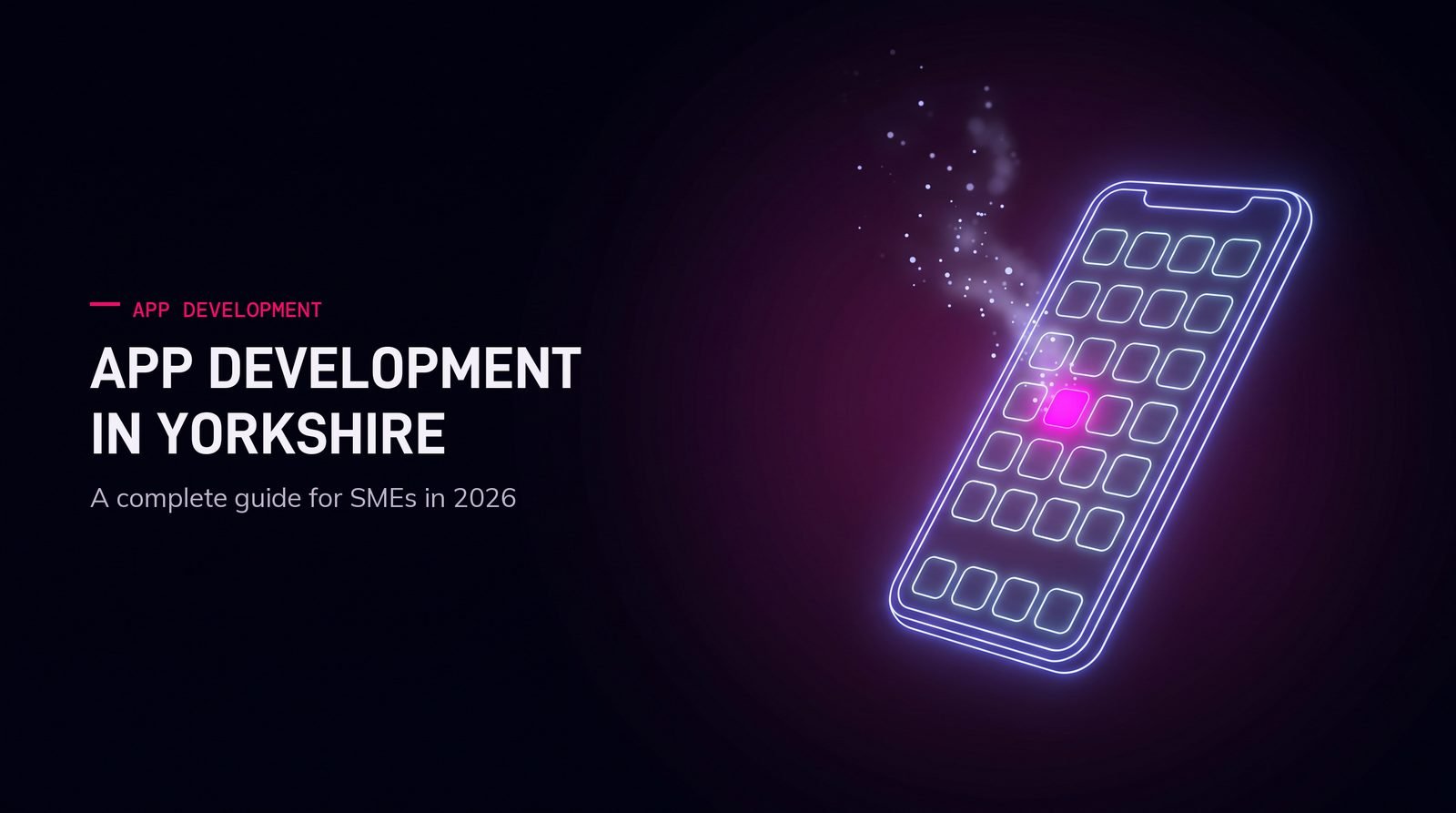
Why Yorkshire SMEs are investing in app development
You've had the idea for a while. An app that makes it easier for your customers to book, order, track or engage with your business. But where do you start? Who do you trust? And is it actually worth the investment for a business your size?
This guide answers all of that. It's written for UK SMEs, particularly those in Yorkshire, who are serious about app development in 2026 but want to go in with a clear head.
Yorkshire's business scene is in good shape. From independent retailers in Leeds to engineering firms in Doncaster and hospitality businesses across Sheffield and Harrogate, more SMEs are waking up to the fact that a well-built app isn't a luxury. It's a competitive tool.
Your customers already live on their phones. If your business depends on repeat bookings, service calls, loyalty programmes or regular ordering, an app gives you a direct line to your audience that no social media platform can match.
The businesses seeing the strongest return from app investment in 2026 share one thing: they built around a specific business problem, not just because it seemed like a good idea.
What type of app does your business actually need?
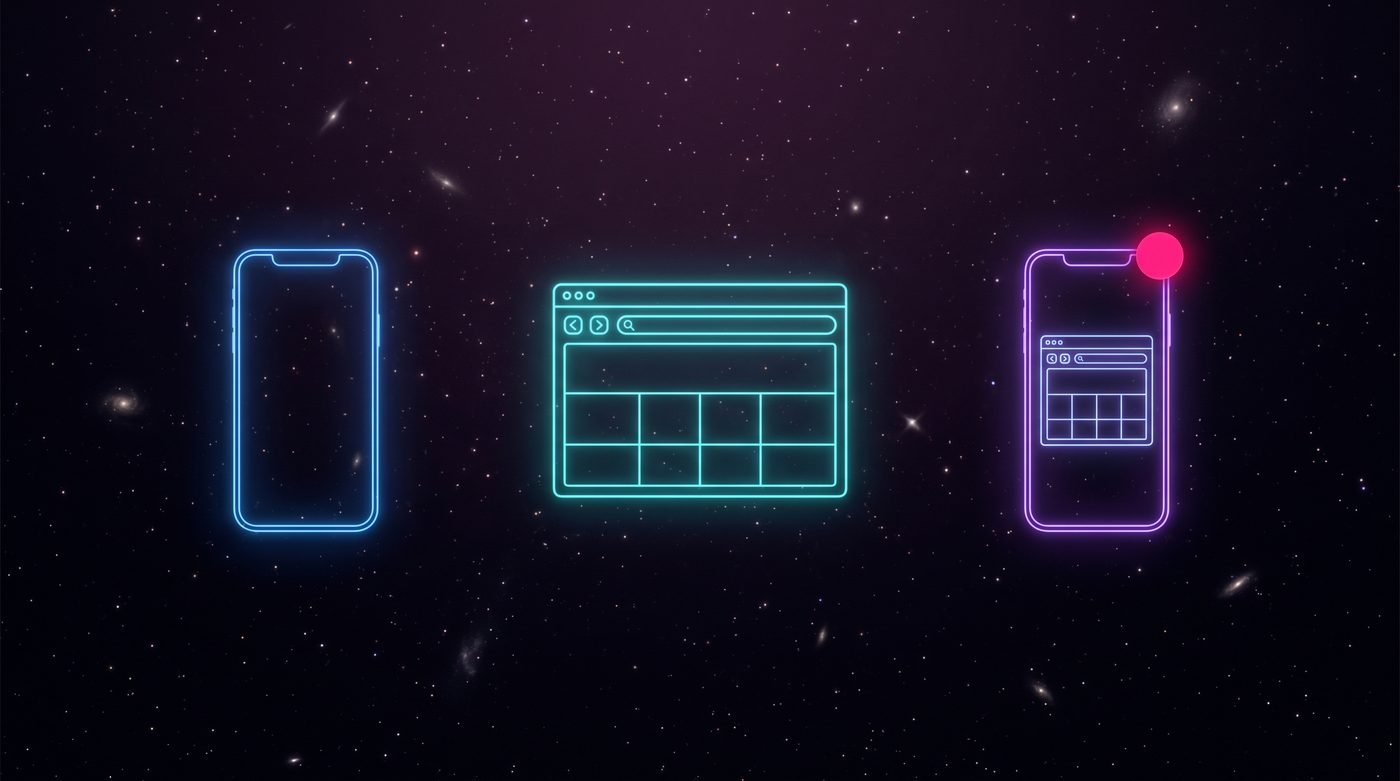
Before you brief a developer, you need to know what you're actually commissioning. There are three main categories, and the right choice depends on your audience, your budget and what the app needs to do. Pick one to see where it fits:
The app development process explained
A good app development partner won't just take your brief and disappear for three months. The process should be structured, collaborative and transparent from start to finish. At Purple Space, every project follows four clear stages:
- 1. Discovery. This is where the real work begins: understanding your business goals, your customers' behaviour and the specific problem the app needs to solve. Skipping this stage is where most app projects go wrong.
- 2. Strategy. Before a single screen is designed, there's a plan. What features are essential at launch? What can wait? How does the app support your wider business goals? Getting this right early prevents expensive scope creep later.
- 3. Design and development. This is where the app takes shape: intuitive interfaces, logical flows and clean builds that work reliably. Design and development should happen in close collaboration, not in separate silos.
- 4. Launch and beyond. Launching isn't the finish line. A good partner helps you get the app in front of your audience, monitors performance and iterates based on real feedback.
What to look for in a Yorkshire app development partner
Choosing the right agency matters as much as the app itself. A poorly managed project costs you time, money and momentum. Here's what to look for:
- A structured process. If an agency jumps straight to quoting without asking about your business goals, that's a red flag.
- Full-service capability. App development doesn't exist in isolation. You need someone who understands brand, SEO and marketing, not just code.
- Relevant experience. Have they built apps for businesses like yours? Ask to see examples.
- Honest scoping. A good partner tells you what you actually need, not what generates the biggest invoice.
- Ongoing support. Apps need maintenance, updates and improvements. Make sure your partner is in it for the long term.
The South Yorkshire and wider Yorkshire market has a growing number of agencies offering app development. Some are genuine specialists; others bolt it on to their web design offer. The difference shows in the output. When you're ready to talk to anyone, our guide on how to brief a digital agency will make that first conversation far more productive.
Common mistakes SMEs make when commissioning an app
These come up again and again, and they're all avoidable. Tap each one for what to do instead.
How app development fits into your wider digital strategy
An app works best when it's part of a joined-up digital presence. Your website, SEO, social channels and app should all reinforce each other, not pull in different directions.
A trade business in Yorkshire, for example, might use a custom web app to let customers request quotes and track job progress. That same business might use SEO to drive traffic to their website, and paid advertising to promote the app to existing customers. When everything works together, the results compound.
That's why working with an agency that covers brand, web, app and marketing under one roof removes so much friction. There's no briefing three separate suppliers or chasing consistency across disconnected teams.
We've worked with 60+ businesses across the UK, helping them build digital products that serve a genuine commercial purpose. Based in Doncaster, with reach across Yorkshire and beyond, we bring strategy and execution together, so your app isn't just built well. It's built for growth.
Questions we get asked
Costs vary significantly depending on the type of app, the number of features and the platform. A web app or PWA typically requires less investment than a full native mobile app. The most important first step is a proper discovery session to scope the project accurately before any budget is committed.
A simple web app or MVP can be delivered in 8 to 12 weeks. A more complex native app with multiple integrations typically takes three to six months. Timelines depend heavily on how clearly the requirements are defined at the start.
Not necessarily. A progressive web app works across all devices and can be a smart first step. If your audience skews heavily towards one platform, a native app for that platform may make more sense. A good agency will help you make that call based on your customers' actual behaviour, not a default recommendation.
Absolutely. Location doesn't limit capability. Many Yorkshire agencies, including those in Doncaster and Sheffield, build apps for clients across the UK. What matters is the quality of the process and the output, not the postcode.
A website is primarily informational: it tells people about your business. A web app is interactive and task-focused: it lets your customers do something, like book, order or manage their account. Many businesses need both.
App promotion should be planned before launch, not after. Effective strategies include email campaigns to existing customers, social media, SEO-optimised landing pages and Google Ads. Your development partner should be involved in this planning from day one.
All apps require ongoing maintenance: operating system updates, security patches, performance monitoring and feature improvements based on customer feedback. Budget for this from the beginning, and confirm exactly what your agency includes in their post-launch support before you sign.
Ready to build your app?
A well-built app can genuinely change how your customers interact with your business. But only when there's a clear strategy behind it.
Whether you're still at the idea stage or ready to brief a development team, the right starting point is a conversation about your goals, not a quote. Talk to us before you brief anyone else. Getting the strategy right at the start saves significant time and budget later.